Introduction: The Rapid Evolution of Software Development
The software development ecosystem in 2026 is evolving at an unprecedented velocity, driven by rapid advancements in computing power, artificial intelligence, cloud infrastructure, and user expectations. Businesses today are not merely adopting technology—they are fundamentally being reshaped by it. Software is no longer a support function; it is the backbone of operational efficiency, customer experience, and innovation.
Organizations that fail to keep pace with emerging development paradigms risk technological obsolescence. From AI-assisted coding to decentralized applications, the modern development stack is becoming more intelligent, automated, and scalable. Understanding these trends is no longer optional—it is a strategic imperative.
AI-Assisted Development: The Coding Revolution
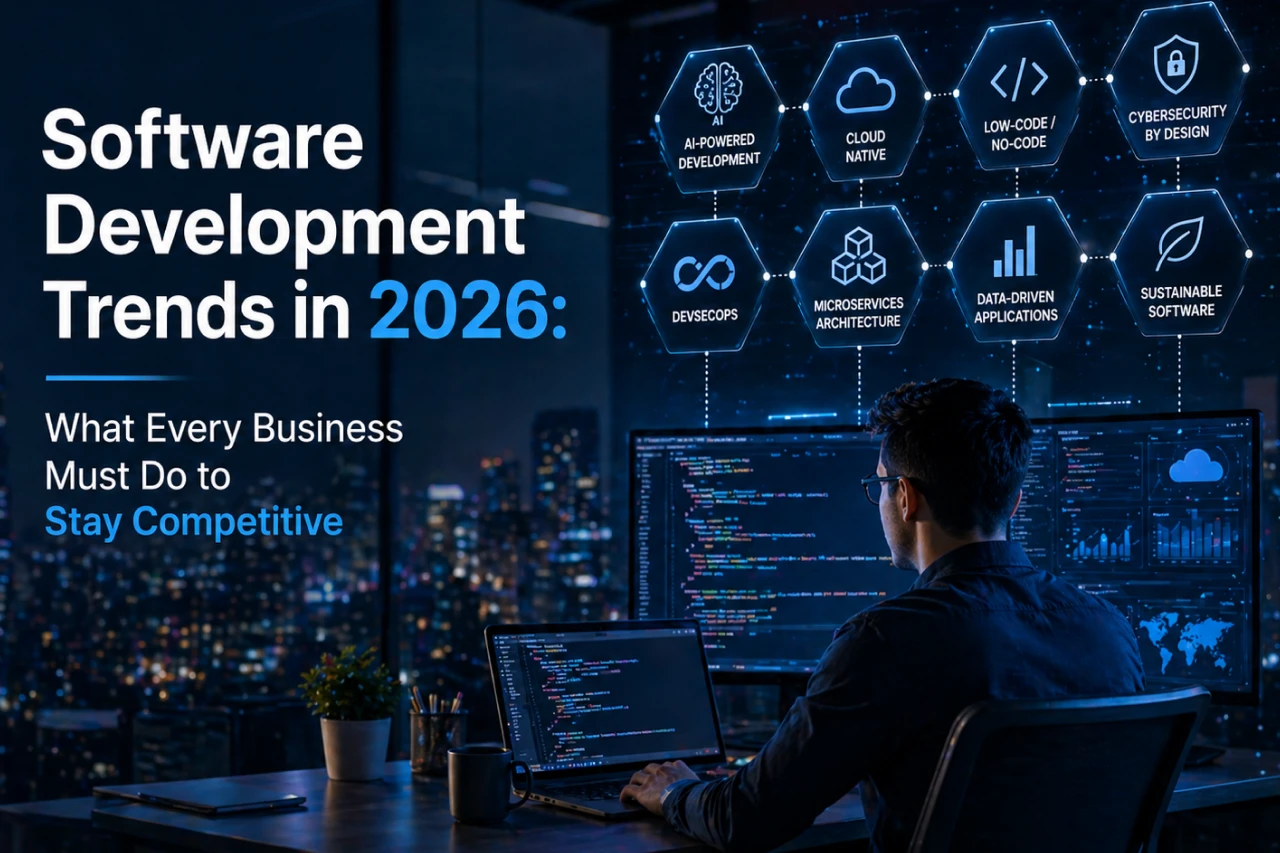
Artificial Intelligence is redefining how software is built. AI-powered coding assistants are now capable of generating entire code blocks, detecting bugs in real time, and even suggesting optimized architectures. Developers are transitioning from manual coding to supervisory roles, where they guide and refine AI-generated outputs.
This paradigm shift accelerates development cycles, reduces human error, and enhances productivity. Tools powered by machine learning models can analyze millions of lines of code to recommend best practices, making development more standardized and efficient.
The Rise of Low-Code and No-Code Platforms
Low-code and no-code platforms are democratizing software development by enabling non-technical users to build applications through visual interfaces. These platforms significantly reduce the time-to-market and empower business stakeholders to actively participate in digital transformation.
While traditional development remains critical for complex systems, low-code solutions are ideal for rapid prototyping, internal tools, and workflow automation. Enterprises are increasingly adopting hybrid approaches that combine custom coding with low-code capabilities.
Cloud-Native Development and Microservices Architecture
Cloud-native architecture has become the de facto standard for modern application development. By leveraging microservices, organizations can build scalable, modular systems that are easier to maintain and deploy.
Containerization technologies and orchestration tools enable seamless scaling, fault isolation, and continuous deployment. This architecture enhances system resilience and allows businesses to respond quickly to changing market demands.
DevSecOps: Integrating Security into Development
Security is no longer an afterthought. DevSecOps integrates security practices directly into the development lifecycle, ensuring vulnerabilities are identified and mitigated early.
Automated security testing, continuous monitoring, and compliance checks are now embedded within CI/CD pipelines. This proactive approach minimizes risks, reduces costs associated with breaches, and enhances user trust.
Edge Computing and Real-Time Processing
With the proliferation of IoT devices and real-time applications, edge computing is gaining prominence. Instead of processing data in centralized cloud servers, computations are performed closer to the data source.
This reduces latency, enhances performance, and enables real-time decision-making. Industries such as healthcare, manufacturing, and autonomous vehicles are heavily leveraging edge computing for mission-critical operations.
Progressive Web Apps (PWAs) and Cross-Platform Development
Progressive Web Apps are redefining user experience by combining the best of web and mobile applications. They are fast, reliable, and capable of working offline, making them highly efficient.
Cross-platform development frameworks further streamline application development by allowing a single codebase to run across multiple platforms. This reduces development costs and ensures consistency in user experience.
Blockchain Integration in Software Systems
Blockchain technology is transforming how data is stored and transactions are executed. Its decentralized nature ensures transparency, security, and immutability.
Applications ranging from supply chain management to financial services are leveraging blockchain for secure and traceable operations. Smart contracts are automating processes, reducing the need for intermediaries.
Sustainability in Software Engineering
Sustainability is becoming a critical consideration in software development. Green coding practices focus on reducing energy consumption, optimizing resource utilization, and minimizing environmental impact.
Efficient algorithms, optimized infrastructure, and eco-friendly data centers contribute to sustainable development practices, aligning technology with global environmental goals.
The Future of Software Development
The future of software development lies in automation, intelligence, and adaptability. Technologies such as quantum computing, AI-driven architecture design, and autonomous systems will further redefine the landscape.
Organizations must invest in continuous learning, adopt modern frameworks, and foster innovation-driven cultures to remain competitive.
Conclusion
The software development trends of 2026 emphasize speed, intelligence, and scalability. Businesses that proactively embrace these innovations will gain a significant competitive advantage. Techinvent Global Private Limited stands at the forefront of this transformation, enabling organizations to leverage cutting-edge technologies for sustainable growth.