Introduction: AI as a Strategic Imperative
Artificial Intelligence has transitioned from a futuristic concept to a foundational business technology. In 2026, AI is no longer a differentiator—it is a necessity. Organizations across industries are leveraging AI to enhance efficiency, reduce costs, and deliver superior customer experiences.
The integration of AI into business processes is redefining how decisions are made, operations are executed, and value is delivered.
AI in Decision-Making and Predictive Analytics
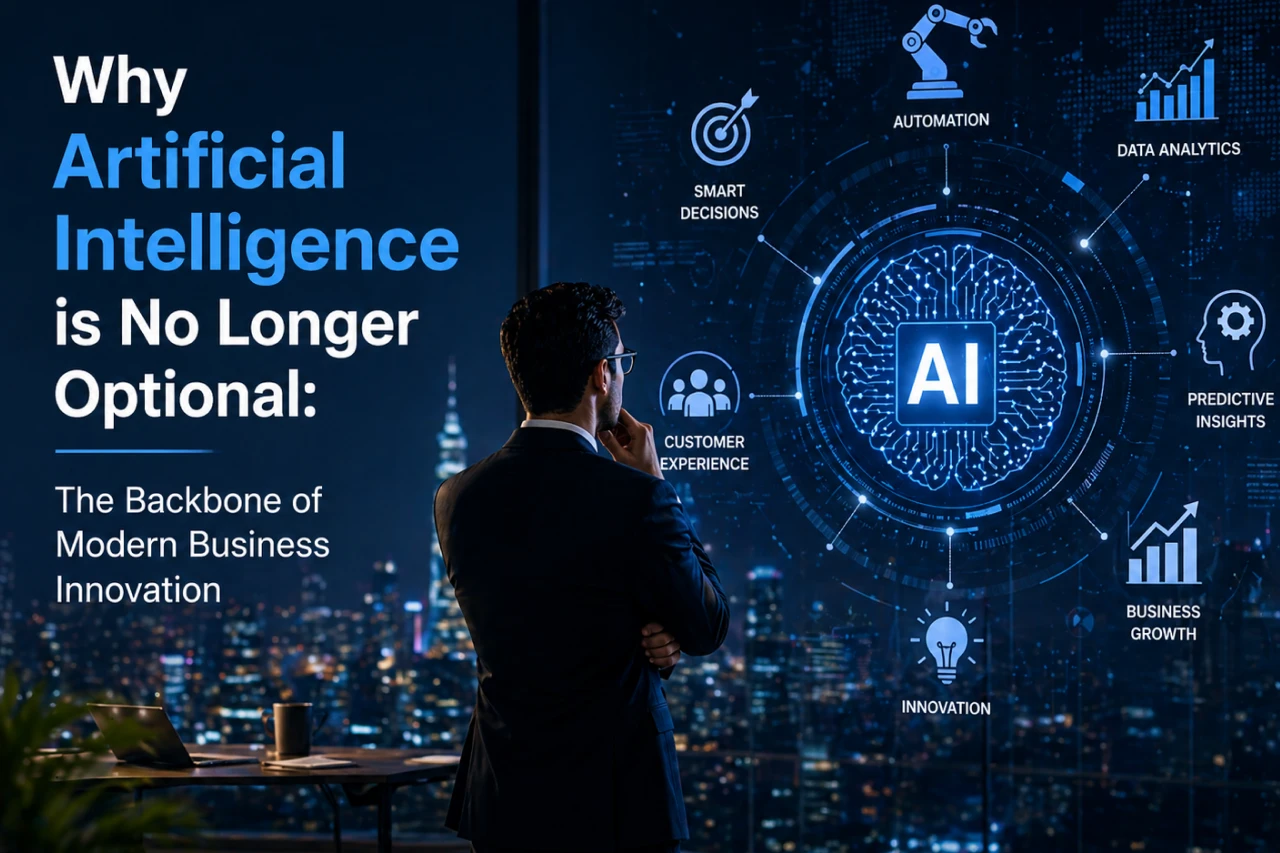
AI-driven analytics enable organizations to make informed decisions based on real-time data. Predictive models analyze historical patterns to forecast future outcomes, reducing uncertainty and improving strategic planning.
Businesses can anticipate market trends, customer behavior, and operational challenges, enabling proactive decision-making.
Automation and Operational Efficiency
Automation powered by AI is transforming operational workflows. From robotic process automation to intelligent chatbots, AI reduces manual intervention and enhances productivity.
Repetitive tasks are automated, allowing human resources to focus on strategic initiatives. This leads to improved efficiency and reduced operational costs.
Enhancing Customer Experience
Customer expectations are evolving, and personalization has become a key differentiator. AI enables businesses to deliver tailored experiences based on user preferences and behavior.
Recommendation engines, virtual assistants, and sentiment analysis tools enhance engagement and improve customer satisfaction.
AI in Marketing and Sales Optimization
AI is revolutionizing marketing strategies by enabling data-driven campaigns. Advanced algorithms analyze customer interactions to optimize targeting and messaging.
Sales teams leverage AI insights to identify high-value leads, improve conversion rates, and maximize return on investment.
AI-Powered Cybersecurity
Cybersecurity threats are becoming increasingly sophisticated. AI enhances security by detecting anomalies, identifying threats, and responding in real time.
Machine learning algorithms continuously learn from new data, improving their ability to prevent breaches and protect sensitive information.
Industry Applications of AI
AI is transforming industries across the board:
- Healthcare: Early diagnosis and personalized treatment
- Finance: Fraud detection and risk management
- Retail: Inventory optimization and customer insights
- Manufacturing: Predictive maintenance and quality control
These applications demonstrate the versatility and impact of AI in modern business ecosystems.
Ethical Considerations and Challenges
Despite its benefits, AI presents challenges related to ethics, bias, and data privacy. Organizations must ensure transparency, fairness, and accountability in AI implementations.
Regulatory compliance and ethical frameworks are essential to build trust and mitigate risks.
The Future of AI in Business
The future of AI is characterized by increased autonomy, integration, and intelligence. From self-learning systems to cognitive computing, AI will continue to evolve and drive innovation.
Businesses that invest in AI capabilities will lead the next wave of digital transformation.
Conclusion
Artificial Intelligence is no longer optional—it is a cornerstone of modern business strategy. Organizations that embrace AI will unlock new opportunities, enhance efficiency, and achieve sustainable growth. Techinvent Global Private Limited empowers businesses to harness the full potential of AI for transformative success.